Flocculants selected by charge, molecular weight and solids.
BlancoWT® Flocculants are developed for industrial wastewater and sludge-treatment applications where particle aggregation, settling behavior, water clarity and dewatering performance must be matched through polymer selection, jar testing and application trials.
In flocculation, the right polymer is not the strongest one. It is the one that matches the solids.
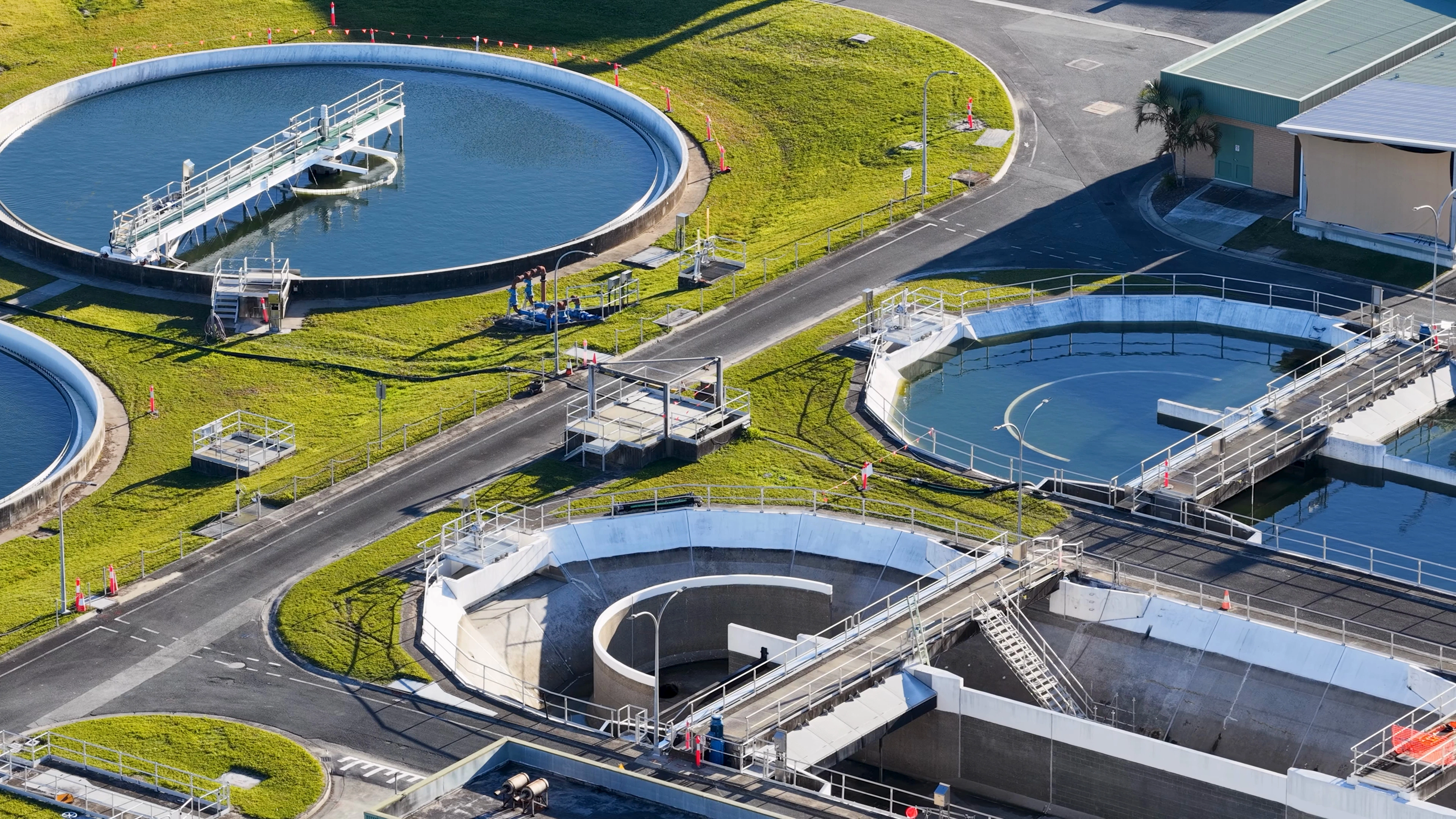
Product selection depends on water analysis, system design and operating conditions.
Analysis First
Water analysis before product recommendation.
TDS, SDS and certificates are shared upon request.
BlancoWT® is Liberta's industrial wastewater and effluent treatment product family, developed for chemical plants, textile mills, food and beverage facilities, metal processors, industrial utilities and municipal pre-treatment systems. Flocculation is not a catalogue selection problem. PAM-based flocculants can behave very differently depending on ionic character, charge density, molecular weight, solution preparation, water chemistry, pH, conductivity, suspended solids, oil/grease content and upstream coagulant program. A polymer that performs well in one effluent can fail in another if the wastewater behavior is different. BlancoWT® Flocculants are therefore a broad polymer selection platform for clarification, solids separation and sludge conditioning. Liberta evaluates the wastewater or sludge sample through jar testing, polymer screening and application-specific trials before recommending an anionic, cationic or nonionic flocculant route.
PAM-based anionic flocculants for selected wastewater clarification, mineral solids, inorganic suspensions and process effluents where anionic polymer response is suitable.
Cationic flocculant options for sludge conditioning, dewatering support and wastewater applications where opposite-charge interaction improves floc formation.
Nonionic flocculant options for selected applications where neutral polymer behavior, bridging and solids aggregation are technically preferred.
Jar testing and sludge dewatering trials protect both the customer and Liberta. The goal is to select the correct polymer chemistry, charge profile, dosage and application method before field deployment.
Wastewater or sludge source, pH, conductivity, TSS, oil/grease, upstream chemistry and variability are reviewed.
Performance depends on actual sample behavior.
Helps improve suspended solids aggregation and settling when the wastewater is polymer-responsive.
Supports formation of larger and more separable flocs through correct polymer type and dosage.
Can support water release and cake formation in sludge dewatering systems when selected by bench trial.
Evaluation of pH, conductivity, suspended solids, sludge type, process source and upstream treatment chemistry.
Comparison of anionic, cationic and nonionic flocculant options under controlled laboratory conditions.
Bench-scale evaluation for filter press, belt press, centrifuge or thickening applications where sludge treatment is required.
Clarification, solids settling and final separation support.
Floc formation and sludge conditioning support before or after flotation chemistry review.
Settling improvement and carryover reduction support.
OUR APPROACH
From analysis to monitoring
Structured technical support at every stage of program selection and field review.
Sample
Jar Test
Optimization
Field
Next step
Explore product families, request a document pack, or send water analysis for technical review.