Controlled cooling water chemistry for heat transfer systems.
PureGuard® Cooling Tower Treatment chemicals are developed for industrial cooling systems where scale, corrosion, microbiological growth and deposition must be managed as one integrated water-treatment program.
Cooling towers do not need a single chemical. They need a controlled program.
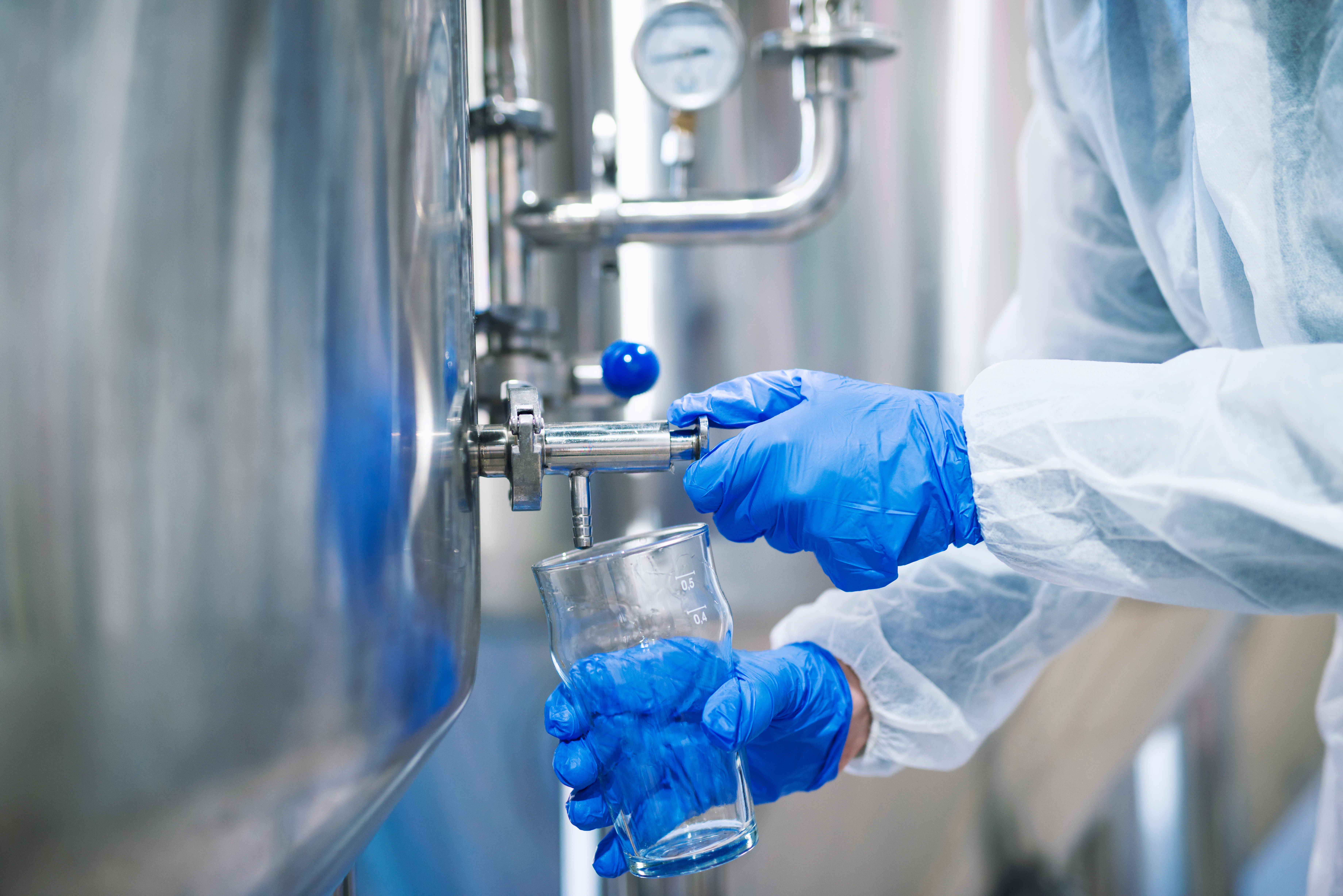
The product family offers phosphate-free, all-organic and no-added-heavy-metal inhibitor options where the application, discharge profile and product scope require them.
Analysis First
Water analysis before product recommendation.
TDS, SDS and certificates are shared upon request.
PureGuard® Cooling Tower Treatment chemicals are designed to support stable heat transfer, corrosion control, scale prevention and microbiological control in industrial open recirculating cooling systems.
The product range includes multi-metal corrosion inhibitors, scale dispersants, deposit-control agents, biocides, biodispersants and program-support formulations for cooling towers, condenser water loops and process cooling circuits.
Liberta evaluates make-up water analysis, cycles of concentration, cooling water chemistry, metallurgy, operating temperature, system cleanliness, microbiological risk and discharge expectations before recommending a cooling water treatment program.
For export markets and distributor partnerships, PureGuard® cooling water programs can be structured with conventional, phosphate-free, all-organic or no-added-heavy-metal inhibitor approaches according to the technical and regulatory requirements of the application.
Biocide selection, biocide availability and application limits must be confirmed according to the destination country, registration status, plant requirements and local regulatory framework.
Scale Control — Helps manage calcium carbonate, calcium sulfate, silica and mixed mineral deposition tendencies in recirculating cooling water.
Corrosion Control — Supports protection of carbon steel, copper alloys, galvanized surfaces and mixed-metal cooling systems depending on metallurgy and program design.
Microbiological Control — Supports control of microbiological growth, biofilm tendency and slime-related performance loss as part of a site-specific water management program.
Deposit and Suspended Solid Management — Helps disperse suspended solids, corrosion by-products, silt and process contamination that can reduce heat transfer and increase fouling.
pH / Alkalinity Management — Supports stable operating windows for scale and corrosion control when pH, alkalinity and cycles of concentration must be optimized.
Discharge-Conscious Alternatives — Supports phosphate-free, all-organic and no-added-heavy-metal inhibitor options where required by customer specifications or discharge limitations.
- Open recirculating cooling towers
- Condenser water systems
- Industrial process cooling circuits
- HVAC cooling tower systems
- Power plant auxiliary cooling systems
- Petrochemical and refinery cooling circuits
- Food & beverage utility cooling systems
- Steel, metal, textile, tire and general manufacturing cooling systems
Heat-Transfer Protection — Helps reduce performance loss caused by mineral scale, deposits and biological fouling on heat-transfer surfaces.
Corrosion Control — Supports metallurgy-specific corrosion protection when the program is selected according to actual water chemistry and system materials.
Scale and Deposit Management — Helps keep suspended solids, hardness salts and mixed deposits dispersed under controlled operating windows.
Microbiological Risk Management — Supports control of slime, biofilm tendency and microbiological growth as part of a broader water management plan.
Water Efficiency Support — Helps operators manage cycles of concentration and blowdown strategy within safe scale/corrosion limits.
Program Flexibility — Allows conventional, phosphate-free, all-organic or no-added-heavy-metal approaches depending on technical and discharge requirements.
Cooling Water Analysis Review — Evaluation of make-up and circulating water parameters before product recommendation.
Program Selection — Selection of corrosion, scale, microbiological and deposit-control components according to system conditions.
Dosage Guidance — Initial dosage guidance based on water chemistry, system volume, blowdown rate and operating targets.
Technical Documents — TDS, SDS, compliance statements and product-specific documentation provided upon request and review.
Distributor / OEM Support — Private-label or distributor-oriented support model where product scope, documentation and market requirements are reviewed together.
PROGRAM-BASED TREATMENT
A cooling tower is a dynamic concentration system
Water temperature, evaporation, cycles of concentration, suspended solids, airborne contamination, metallurgy and make-up water quality all change the chemical balance.
PureGuard® Cooling Tower Treatment is therefore a program-based solution: product selection follows water analysis, system metallurgy, operating conditions, microbiological risk profile and discharge requirements.
Treatment program architecture
| Step | Technical focus | What we review |
|---|---|---|
| 1 | Water analysis and system data | Make-up water, cooling water, conductivity, pH, alkalinity, hardness, chloride, sulfate, silica, iron and microbiological indicators are reviewed. |
| 2 | System operating profile | Cycles of concentration, evaporation load, blowdown strategy, temperature range and contamination sources are evaluated. |
| 3 | Metallurgy and compatibility | Carbon steel, copper alloys, stainless steel, galvanized surfaces and elastomers are considered before final program selection. |
| 4 | Program selection | Corrosion inhibitor, scale dispersant, biocide/biodispersant and pH-control strategy are matched to system risk. |
| 5 | Monitoring and optimization | Field analysis, trend review and periodic adjustment support long-term cooling system stability. |
Product family
| Product family | Description | Tags |
|---|---|---|
| Scale & Deposit Control | Dispersants and scale-control products designed to reduce mineral deposition and suspended-solid fouling in recirculating cooling water. | Scale Control, Dispersants |
| Multi-Metal Corrosion Protection | Corrosion inhibitor programs for mixed metallurgy cooling systems, selected according to water chemistry, operating pH and material compatibility. | Multi-Metal, Corrosion |
| Microbiological Control | Biocides and biodispersant support products used as part of controlled cooling water hygiene and biofilm-management programs. | Biocides, Biofilm Control |
| Phosphate-Free / All-Organic Range | Alternatives for applications requiring lower phosphate contribution, discharge-conscious chemistry or specific customer compliance positioning. | Phosphate-Free, All-Organic |
| No-Added-Heavy-Metal Options | Programs without added heavy-metal inhibitors where customer specifications, discharge expectations or market requirements demand this approach. | No Added Heavy Metals |
Industries we support
| Industry | Cooling water relevance |
|---|---|
| Iron & Steel | High heat load, suspended solids, corrosion and scale risk in utility cooling circuits. |
| Power Plants | Cooling towers, condenser systems, boiler auxiliaries and high reliability expectations. |
| Food & Beverage | Utility cooling, process support and hygiene-sensitive industrial environments. |
| Textile | Cooling water, process utilities and color/process contamination risk in some applications. |
| Petrochemical | High fouling risk, heat exchanger protection and corrosion management. |
| Automotive & Tire | Closed-loop and open cooling systems, mixed metallurgy and process utility stability. |
Biocide selection and use must be confirmed according to local regulations and product registration status. Cooling tower microbiological control is provided as program support, not as a public-health guarantee.
OUR APPROACH
From analysis to monitoring
Structured technical support at every stage of program selection and field review.
Analysis
Diagnosis
Treatment
Monitoring
Final product selection depends on water analysis, operating conditions, local regulations and Liberta technical review.
Next step
Explore product families, request a document pack, or send water analysis for technical review.